The Pelton House
The landscape that shaped her vision
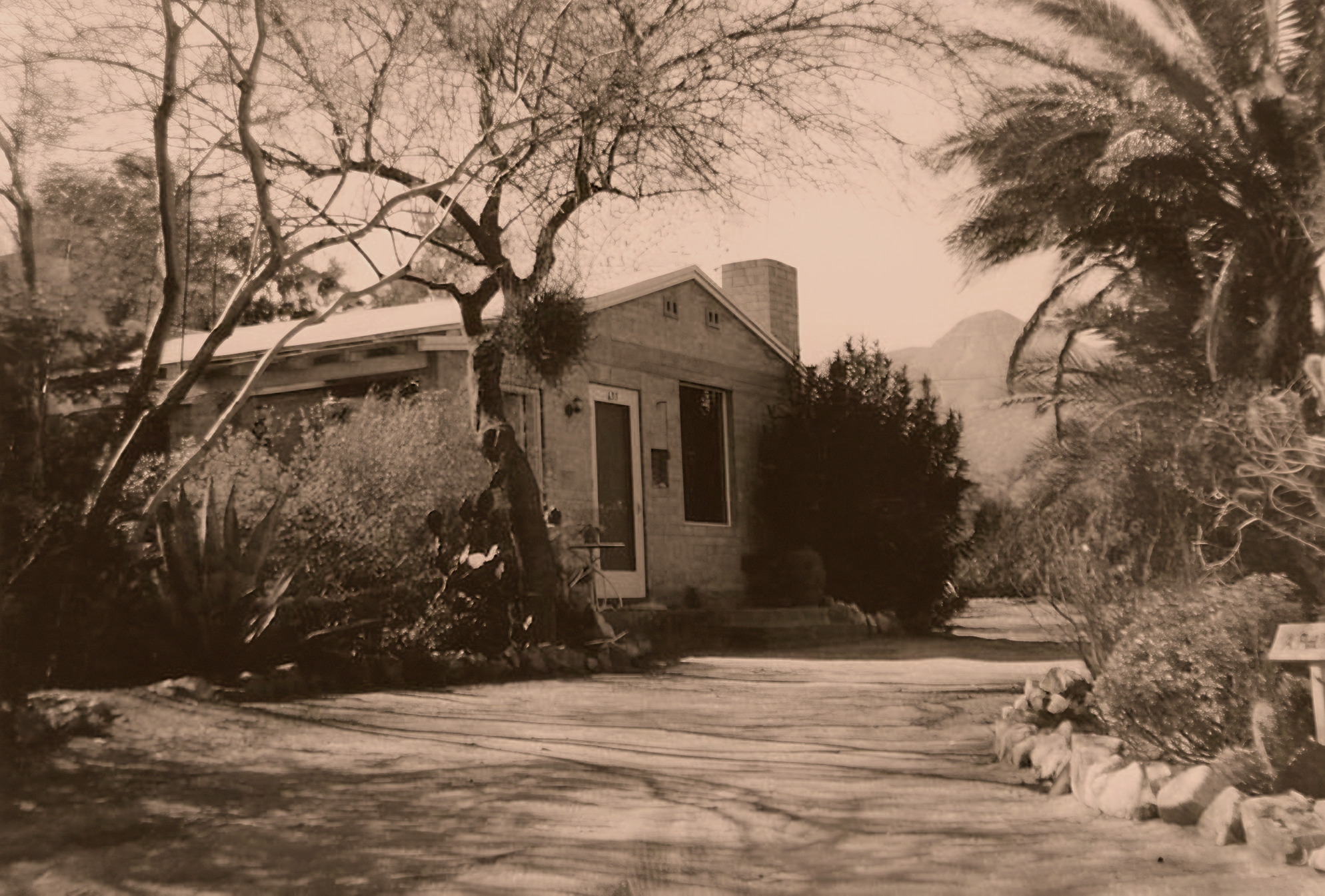
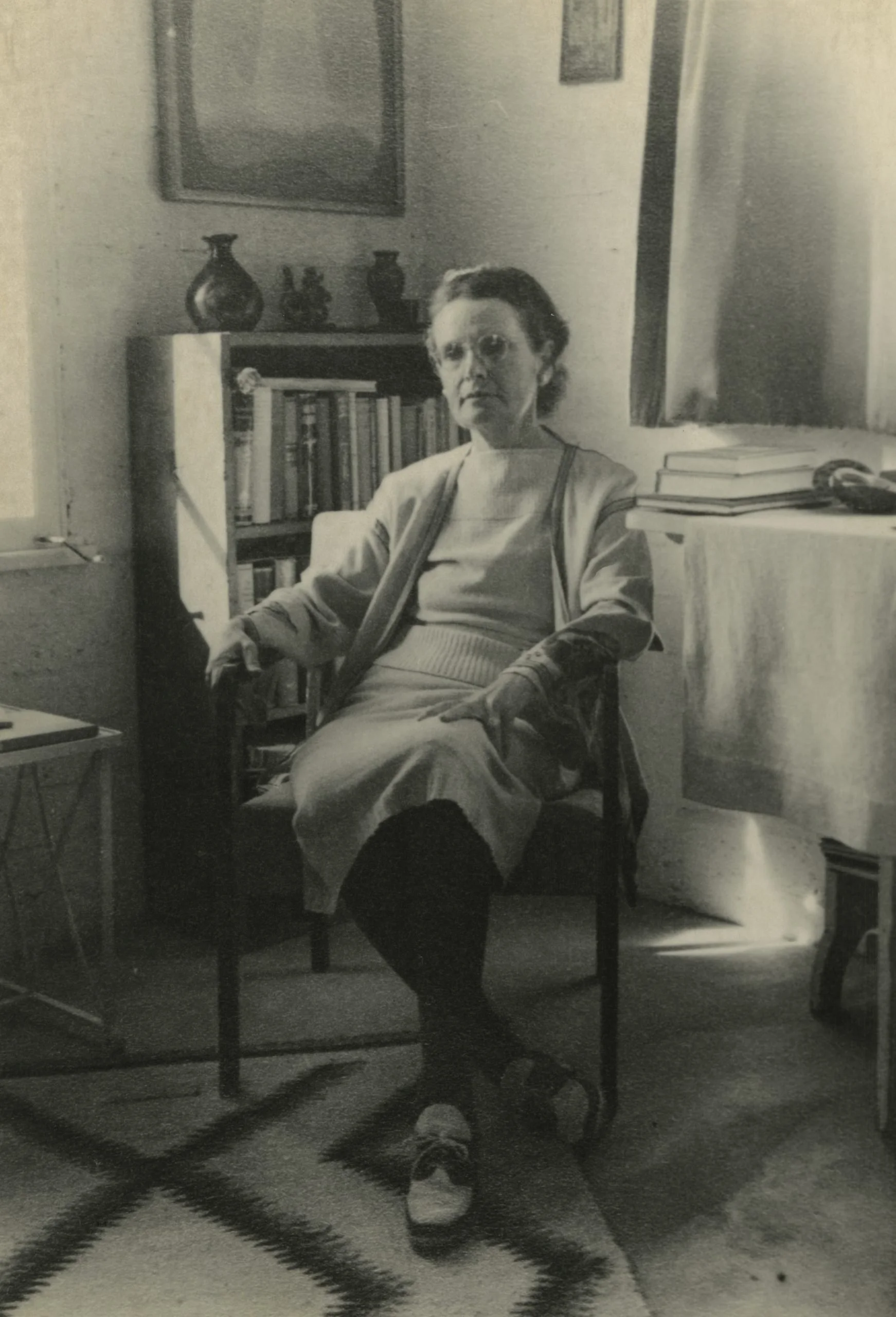
Agnes Pelton's home, Cathedral City, California, 1940s. | Raymond Jonson Archives, University of New Mexico Art Museum
In January 1932, at the age of fifty, Agnes Pelton arrived by train in Palm Springs, determined to find a place where she could fully devote herself to her work.
Soon after, she settled a few miles south in Cathedral City. There, she felt an immediate connection to the surrounding landscape, particularly the presence of Mount San Jacinto and Mount San Gorgonio, whose forms and beauty convinced her that she had arrived for a meaningful reason. She seemed to have found what she was searching for.
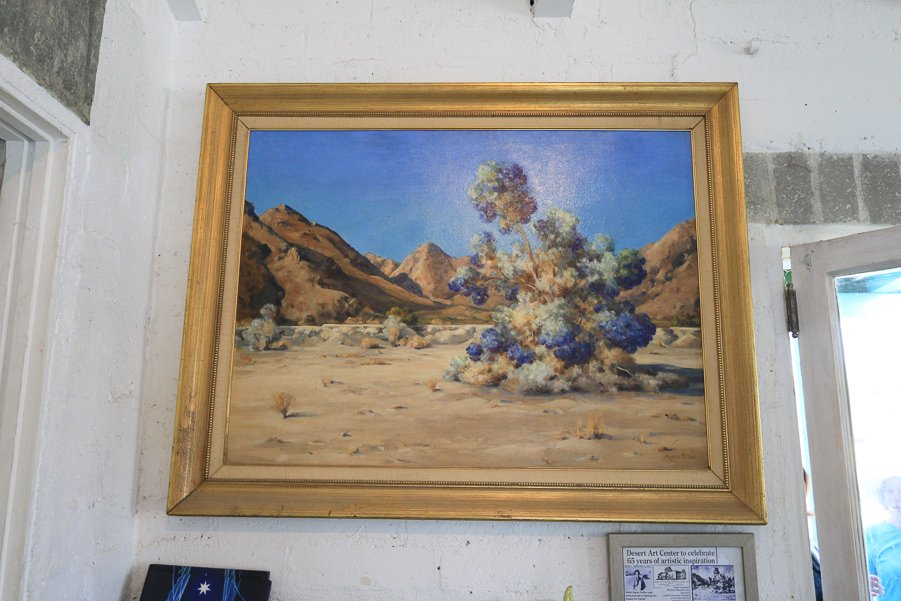
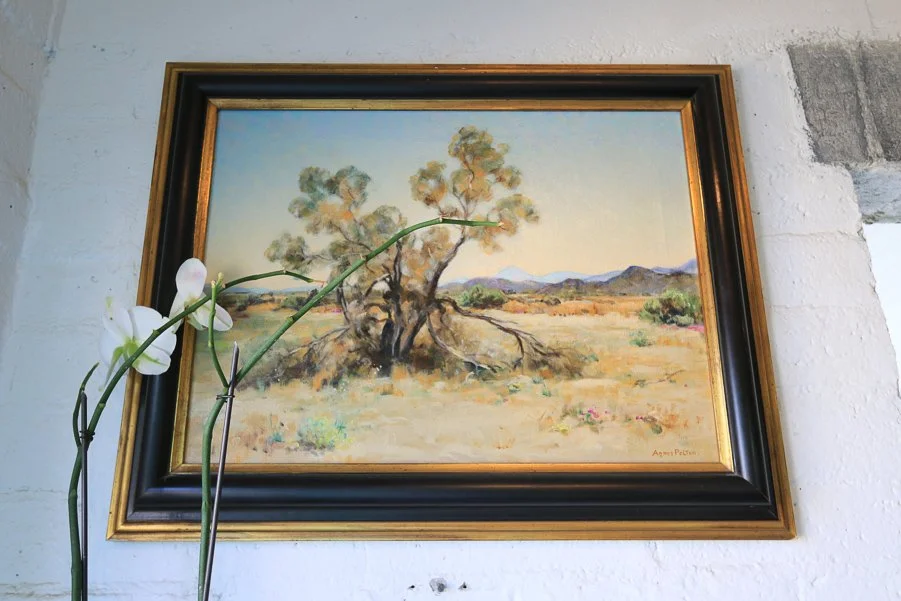
At that time, Cathedral City was a small desert town defined by open space and sweeping, uninterrupted views. Pelton’s home was situated within the Cathedral City Cove, within walking distance of the town center and surrounded by the vast desert landscape. The setting offered both access to daily life and immersion in nature. A lifelong student of the natural world, Pelton was deeply responsive to the distinctive beauty of her new environment. She was fascinated by plant life capable of surviving in the desert and painted desert trees and date palm fruit as enduring symbols of life and strength. The region’s expansive skies, dramatic mountains, and deep canyons also left a lasting impression. In a 1957 interview, she reflected on the power of the desert, saying, “The vibrations of this light, the spaciousness of these skies enthrall me. I knew there was a spirit in nature as in everything else, but here in the desert it was an especially bright spirit. I found wonders here.”
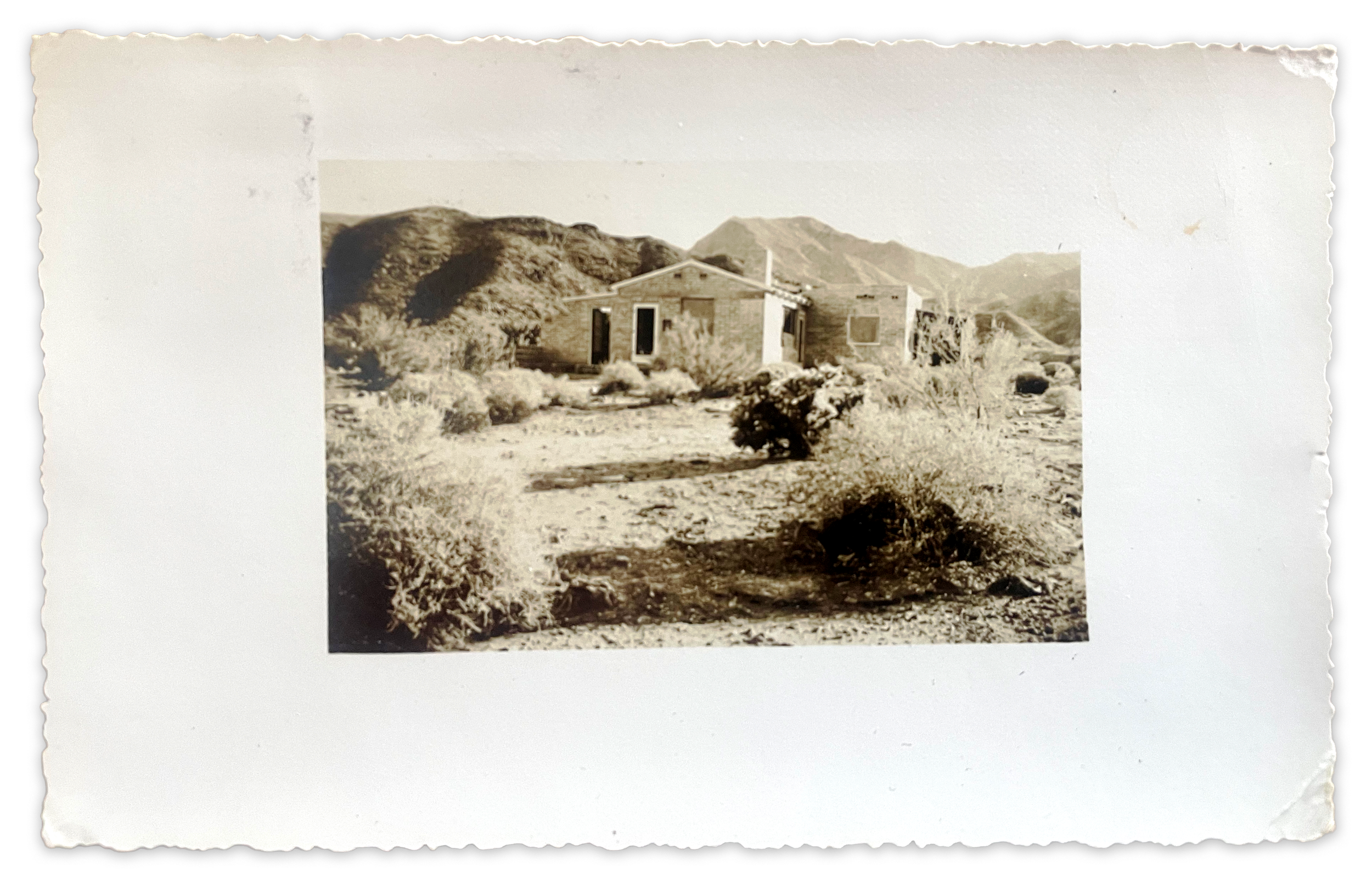
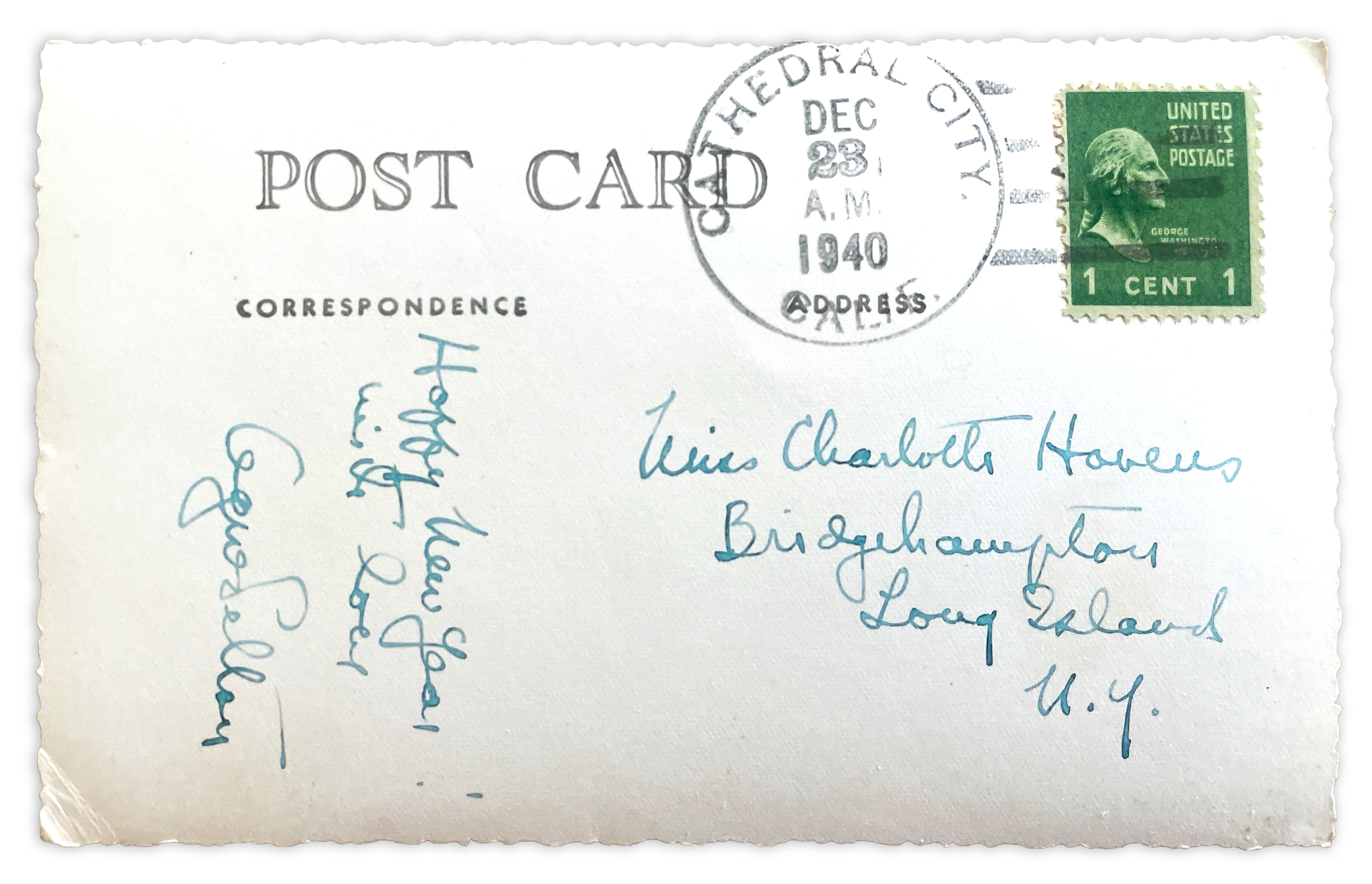
A custom postcard of her Cathedral City home, sent by Agnes Pelton to family and friends.
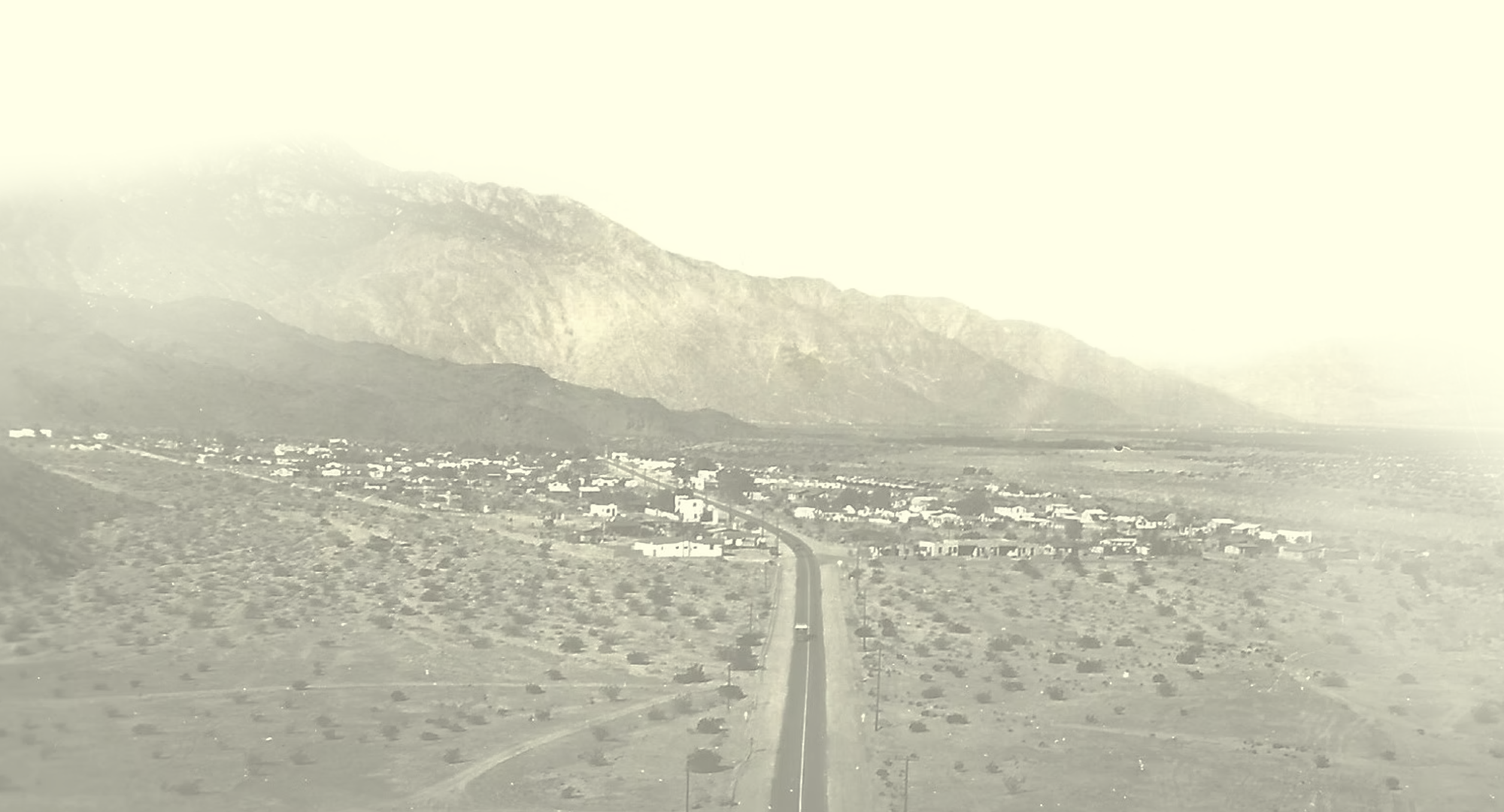
“The two mountains—San Jacinto and San Gorgonio are so gorgeous. I have a feeling that there is some special reason for being here.”
On March 2, 1936, her father’s birthday, Pelton made a down payment on a lot in Cathedral City.
Agnes noted with quiet wonder how each stage of the process, from the bank loan to the construction of her home, aligned with a series of astrological signs she had been following.
Cathedral Canyon Cove & Hwy 111, c.1940
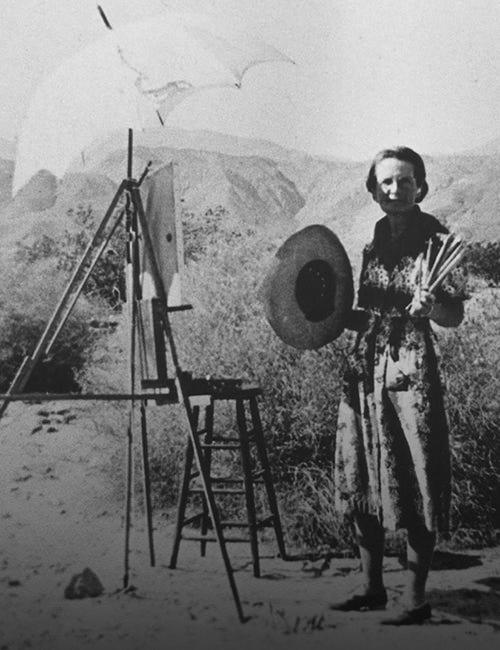
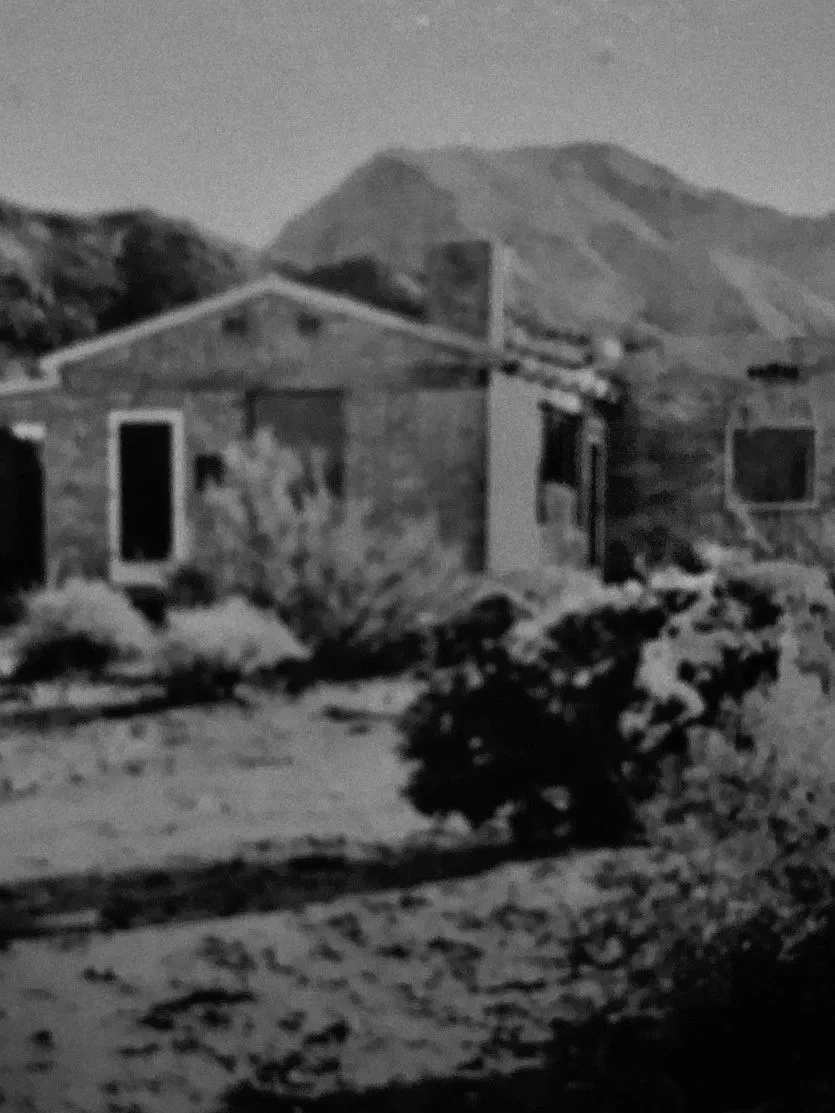
Agnes Pelton’s Cathedral City home and the art shaped by its landscape
At her Cathedral City home, Pelton shaped both her life and her work. Surrounded by open skies and desert winds, she found a lasting refuge where her art could fully flourish. Here, she also built meaningful connections, becoming a trusted neighbor, a source of quiet guidance, and a spiritual and creative presence within her community. spirit.
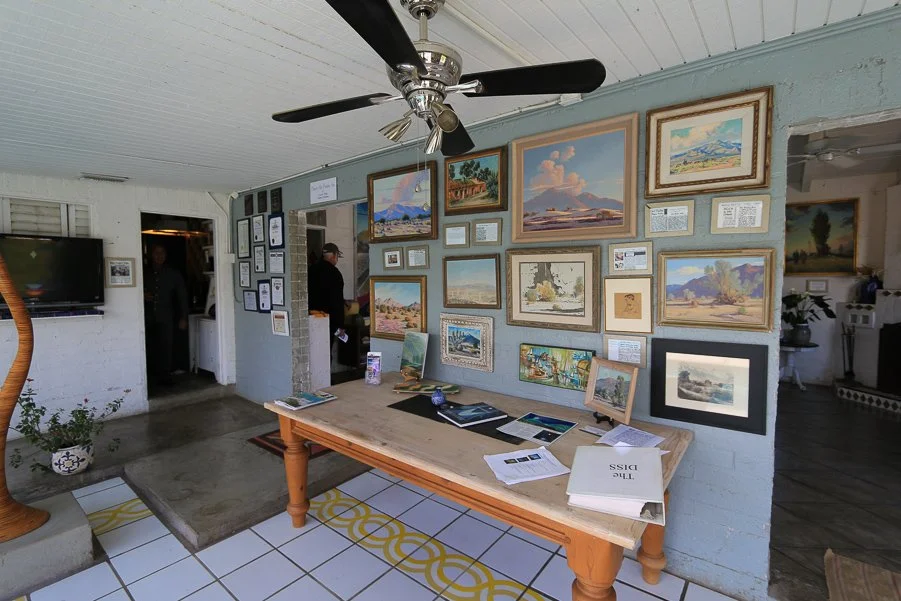
Pelton believed that her desert paintings were best viewed in their proper setting—the desert. She showed her work locally, including at venues such as the Desert Inn in Palm Springs and the Palm Springs Desert Museum, where she held an exhibition in the fall of 1949. She also displayed her landscape paintings in her Cathedral City home studio, which she opened to the public on Sunday afternoons.
In her 1932 grant application to the John Simon Guggenheim Memorial Foundation, Pelton described a project focused on painting “awakening life” in the spring desert, noting the radiant brilliance of desert flowers. She believed that her abstract work had led her to a way of creating the effect of light through pigment and felt confident in her ability to convey the luminous quality of desert blooms.

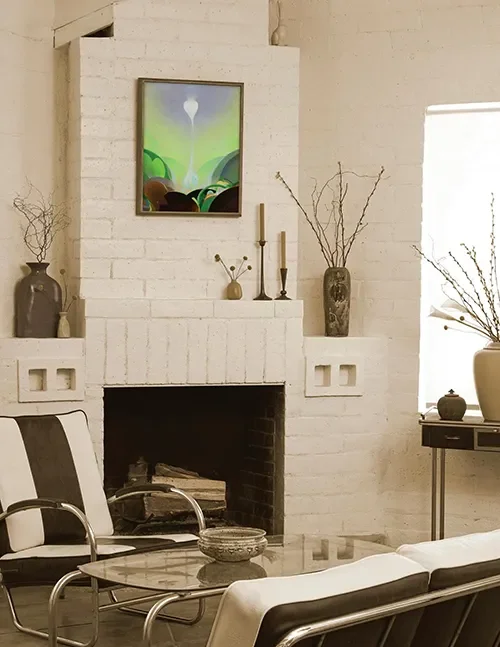
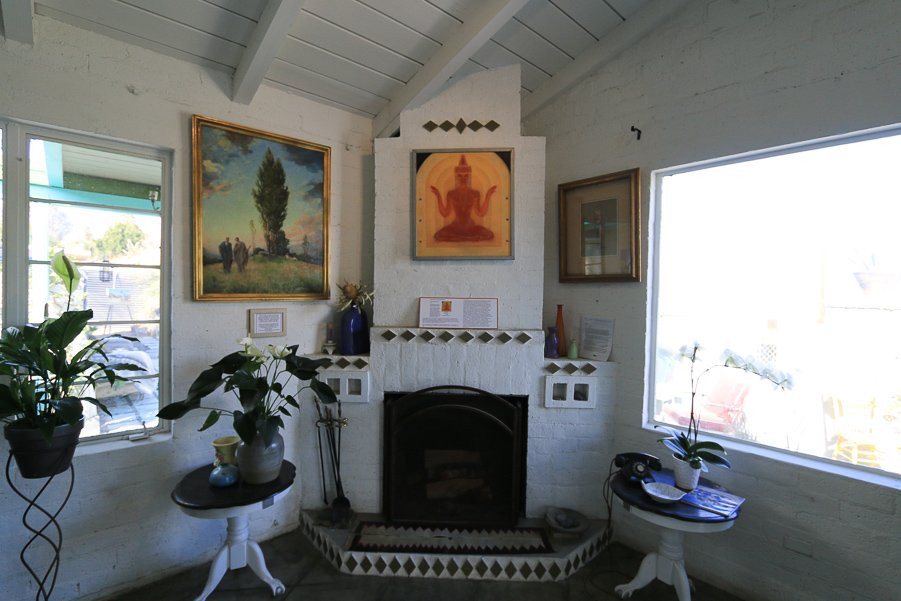
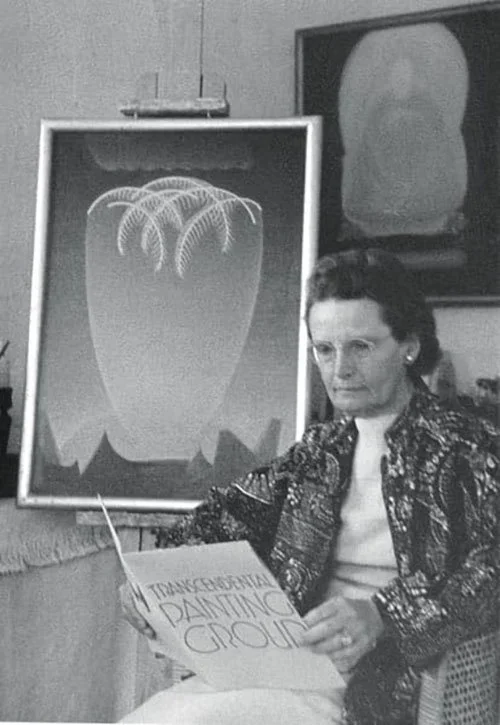
Agnes Pelton’s living room, then and now. Her easel stands at the center of the space, reflecting her deep commitment to her practice. Filled with natural light, the room’s exposed brick and white walls create a calm, focused setting for painting. Pelton modeled the cottage doors after those of her windmill studio, and the brick fireplace includes recessed niches for personal and spiritual objects. Simple and strong, the space was rooted in both artistic and spiritual life.
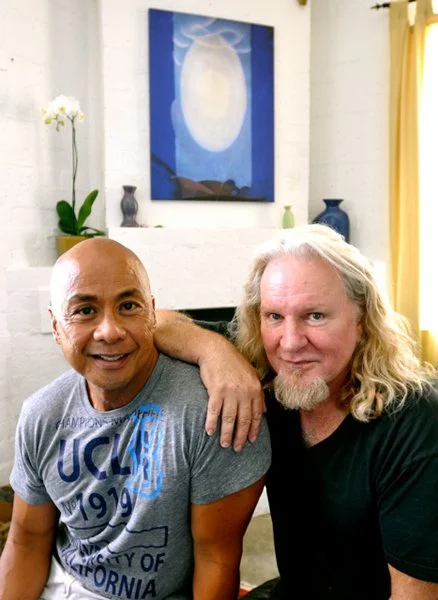
In loving memory of Simeon Den.
Uncovering the Hidden History of Agnes Pelton’s Desert Home
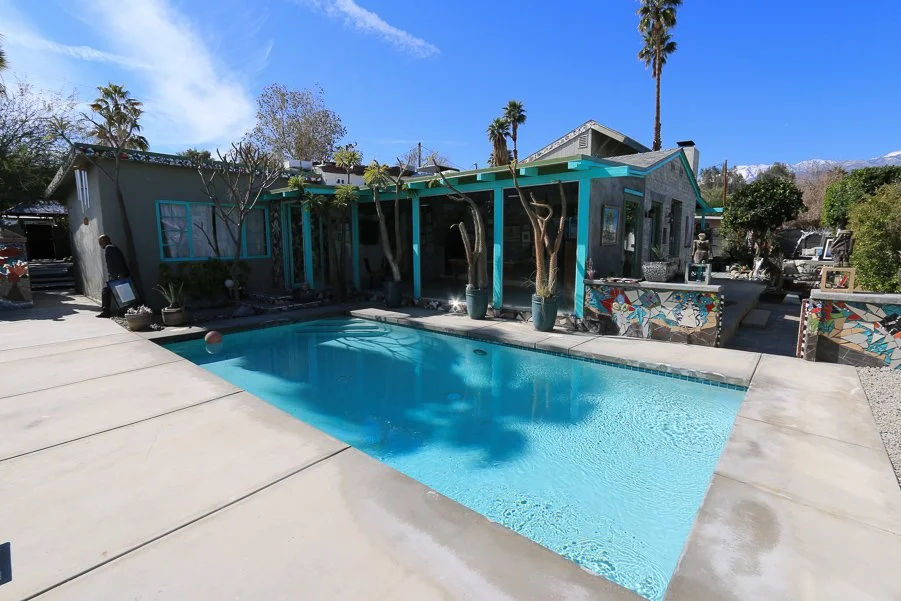
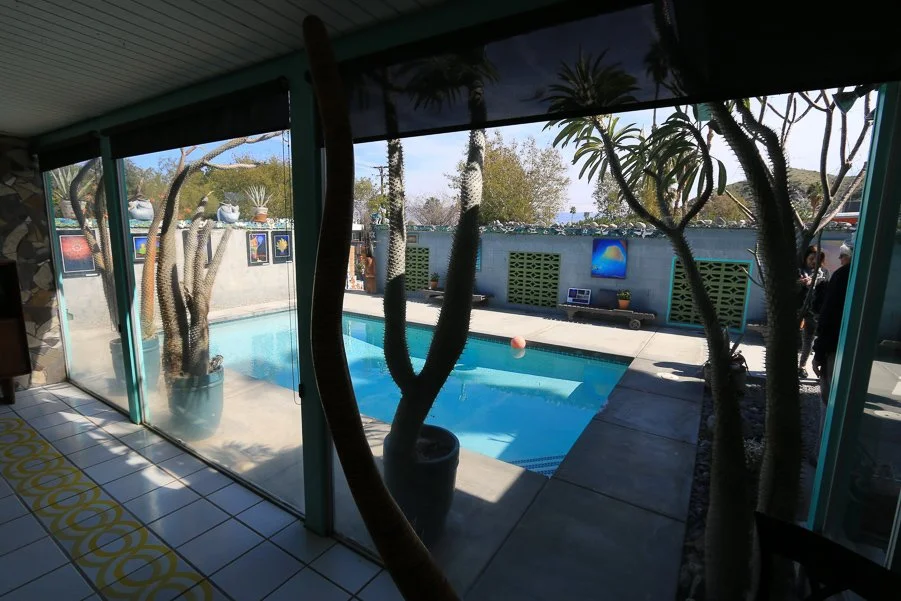
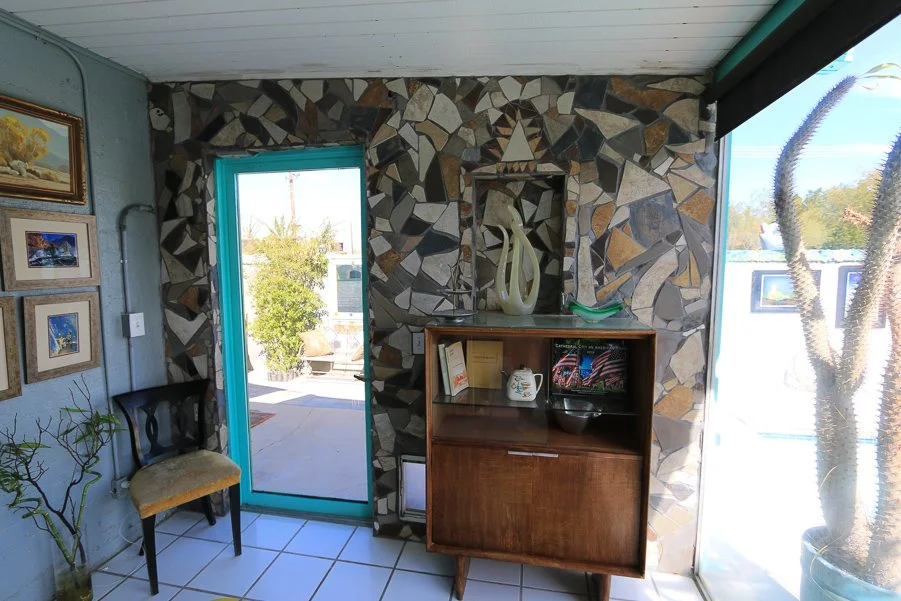
When Peter Paladino purchased the home, he had no clue it was Pelton’s; its history had long faded from memory. Over time, the Cathedral City Cove neighborhood had grown around it, turning what was once the front entrance into the rear. The property continued to evolve, with a defined lot, large windows, a pool, and a two-story loft added over the decades. Though transformed, the house seemed to undergo a quiet desert reawakening, as its creative spirit slowly began to return.
Peter and his husband, Simeon Den, both artists, were unaware that the home had once been Agnes Pelton’s beloved desert cottage before purchasing the residence. Once in escrow, Peter’s realtor, Chris Rain, informed him that the house was Pelton’s original home studio. With the house rediscovered, more notable historians began to emerge, and the home’s story started to unfold. Professor Nancy Shelley reached out to Peter; this was a pivotal meeting, as she had spent years writing her dissertation on Pelton and had amassed a wealth of information, documentation, and insight into Agnes’s life and work. Professor Shelley visited the home and gifted Peter his first Pelton piece.
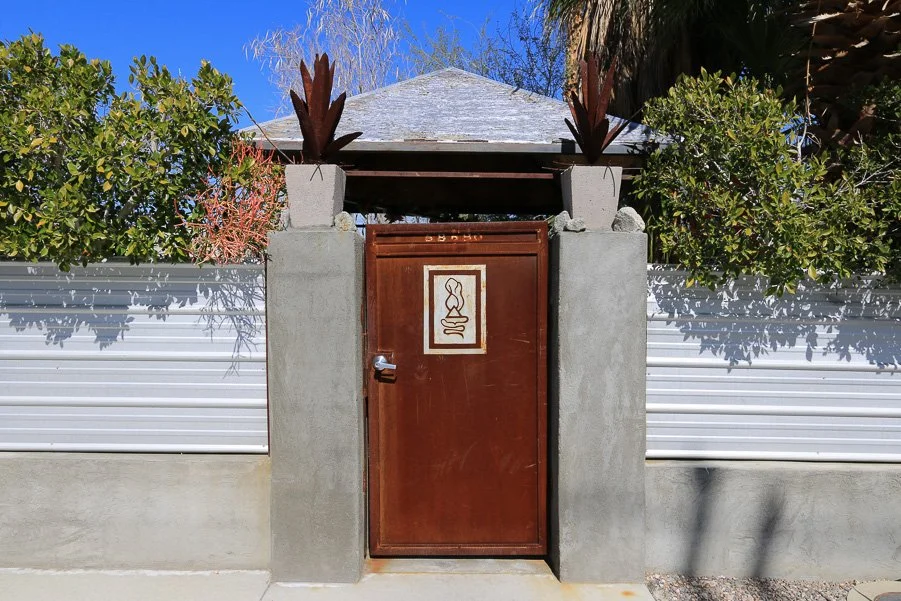
Peter and Den felt honored that the home had, in a way, chosen them. Every small discovery along the way seemed like a gift and a moment of synchronicity. They would stumble upon more clues while living there and making home improvements: the home’s original door, which had been covered over, along with an inset frame bearing Pelton’s spiritual symbol, a mark of personal significance, revealed itself to them. Over time, the couple developed an intimate connection to Pelton and made it their life’s purpose to advocate for her legacy, embracing the home’s mystical presence. To this day, the Pelton House serves as a welcoming beacon for those seeking to learn more about her and to embrace creativity, spirituality, and diversity.
“The vibrations of this light, the spaciousness of these skies enthrall me. I knew there was a spirit in nature as in everything else, but here in the desert it was an especially bright spirit. I found wonders here.”
— Agnes Pelton
Carrying the House Forward: Artists as Stewards of a Living Home
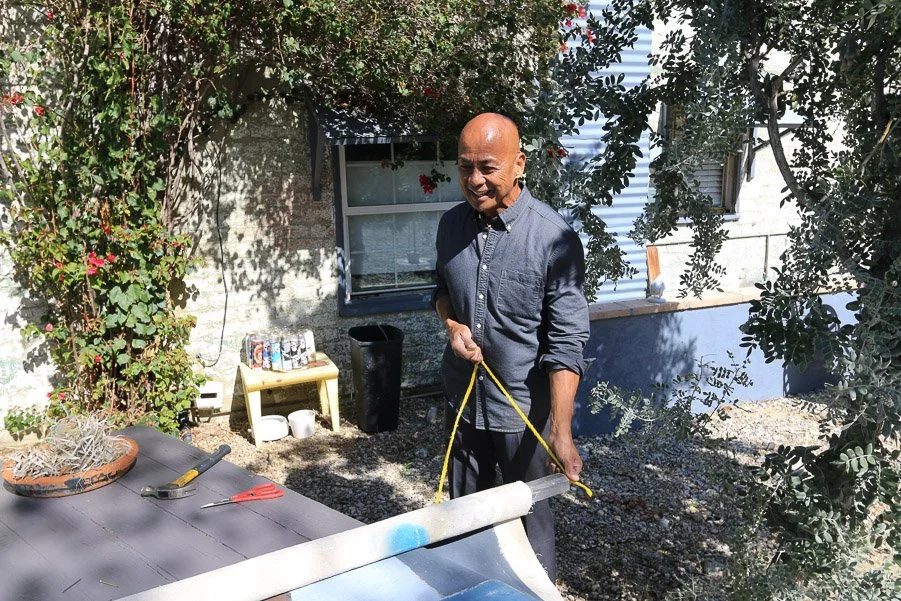
The house could not have found more fitting stewards than Peter Paladino and Simeon Den. Peter, a professional photographer and hairstylist, and Simeon, a classically trained dancer and teacher, felt an immediate and deep connection to the residence and to Agnes Pelton herself. For decades, they advocated for Pelton’s recognition, both locally in the Coachella Valley and internationally within the fine art world.
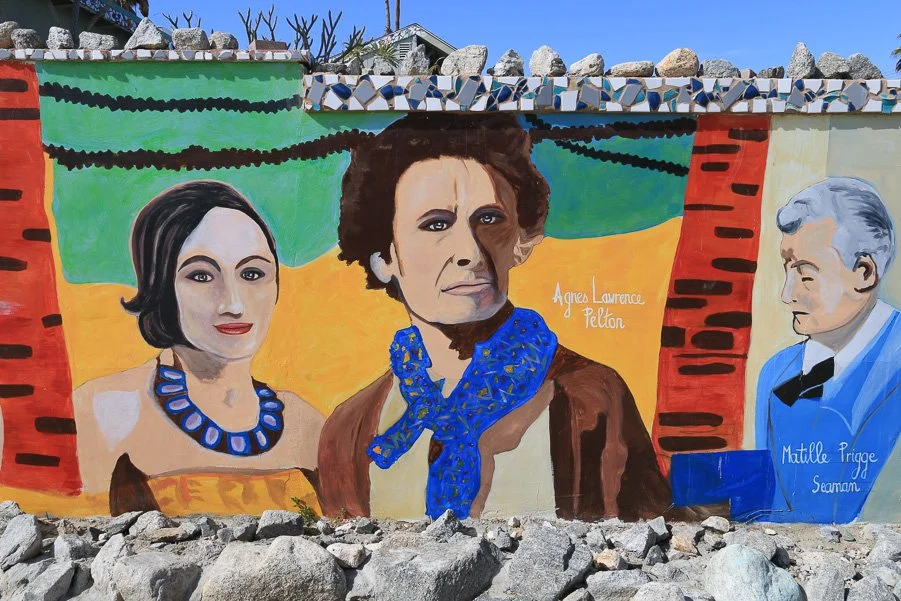
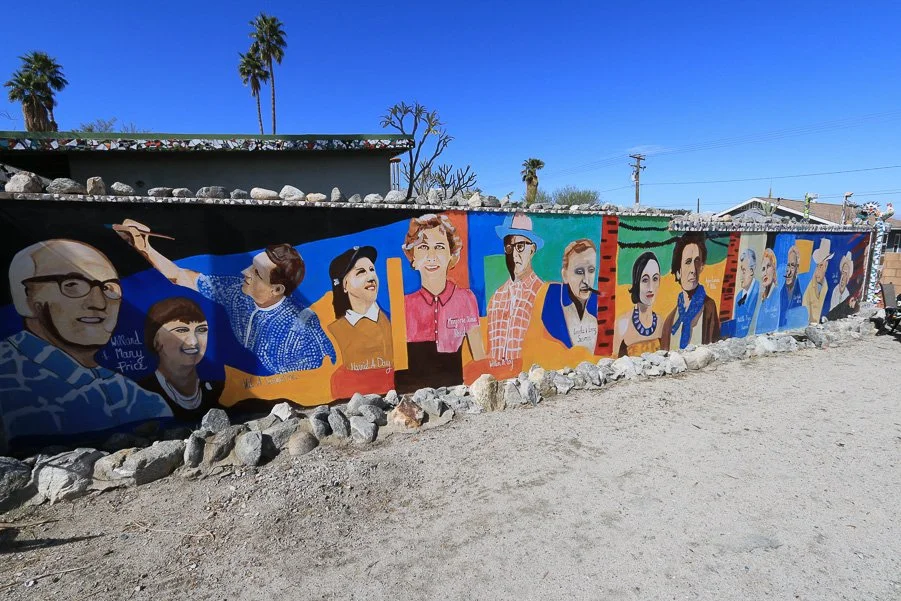
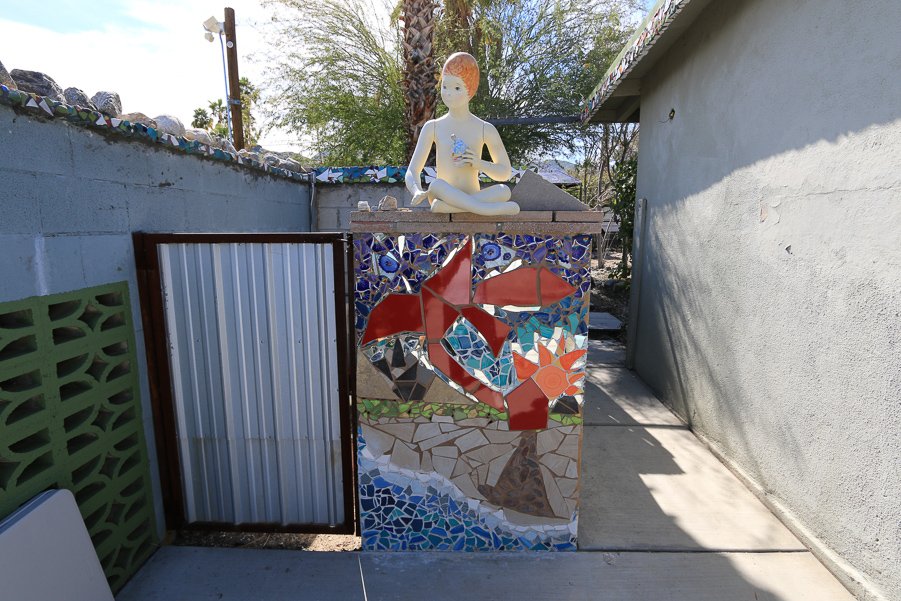
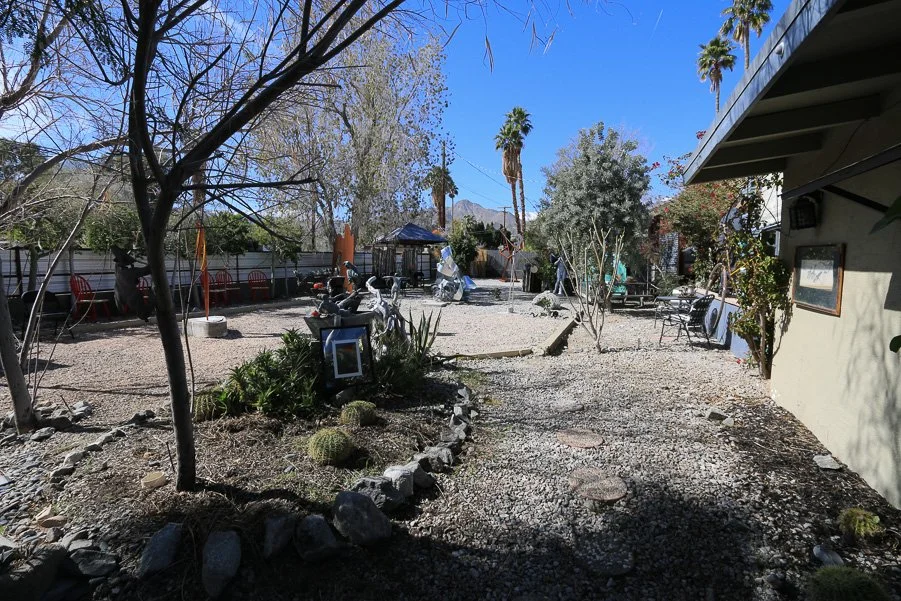
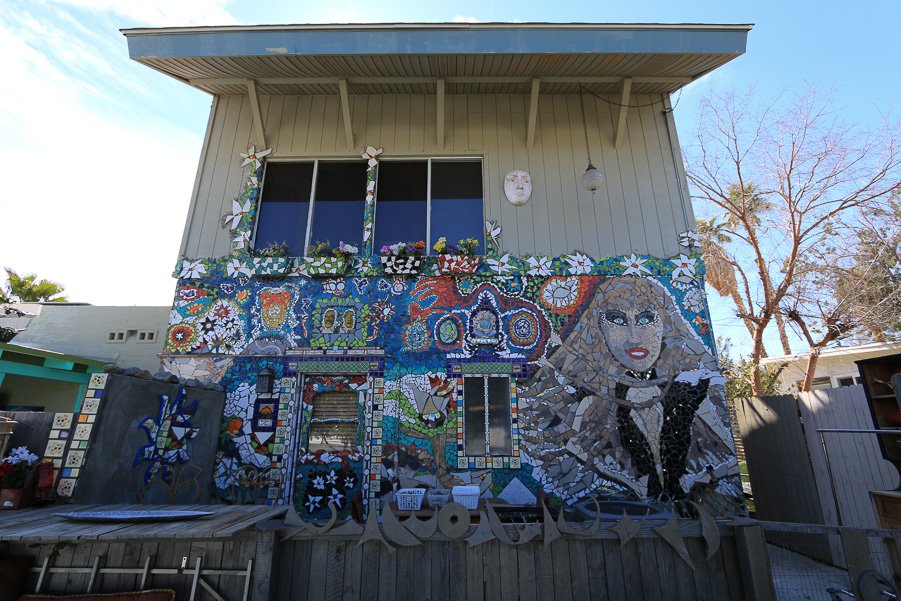
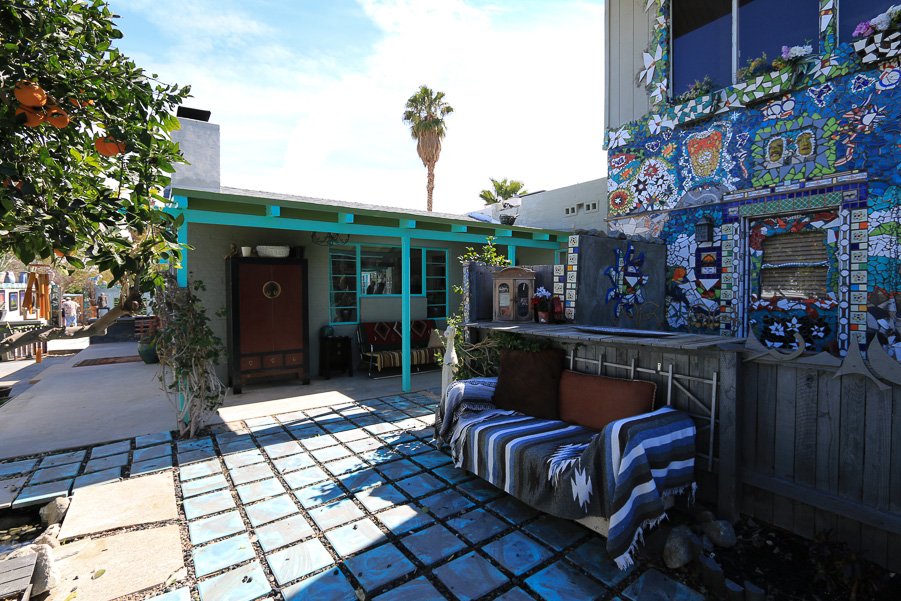
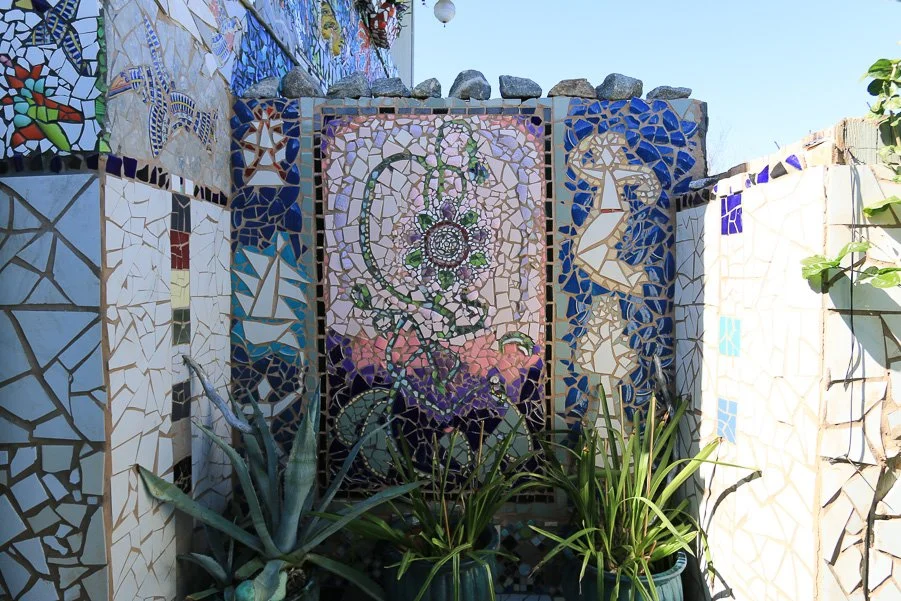
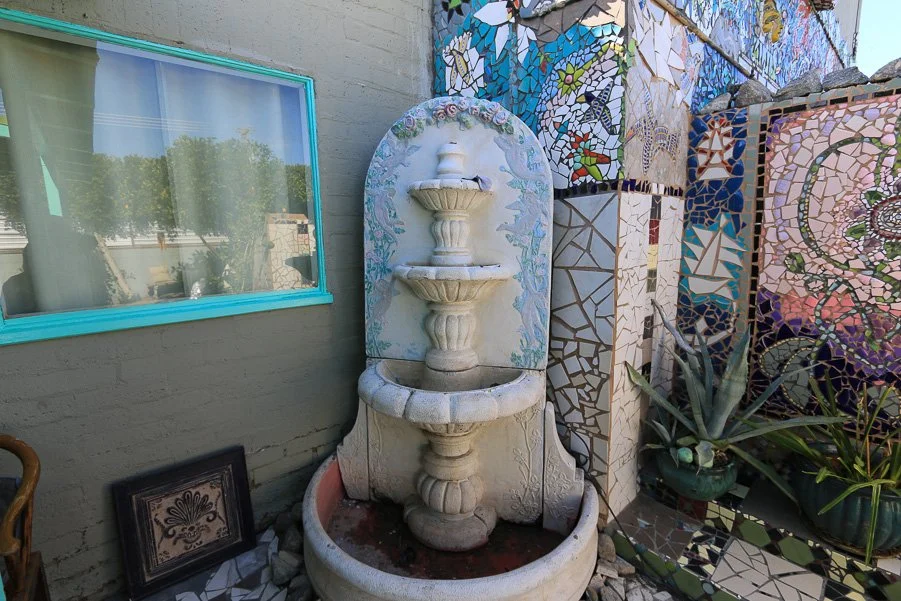
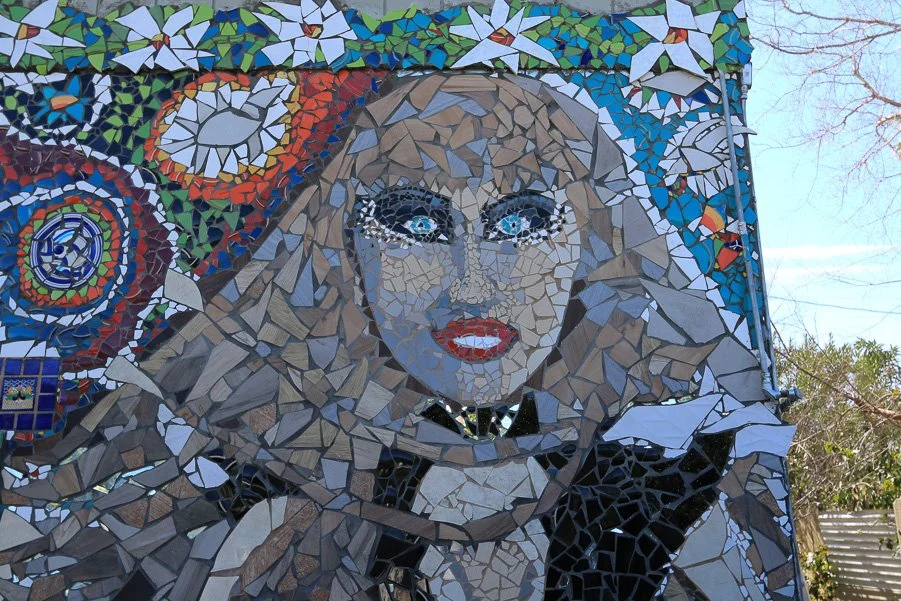
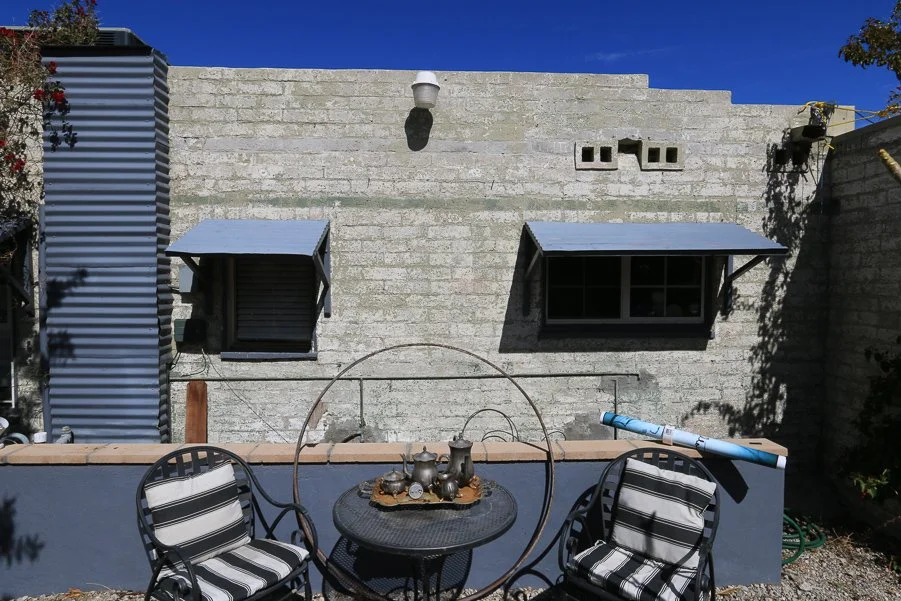
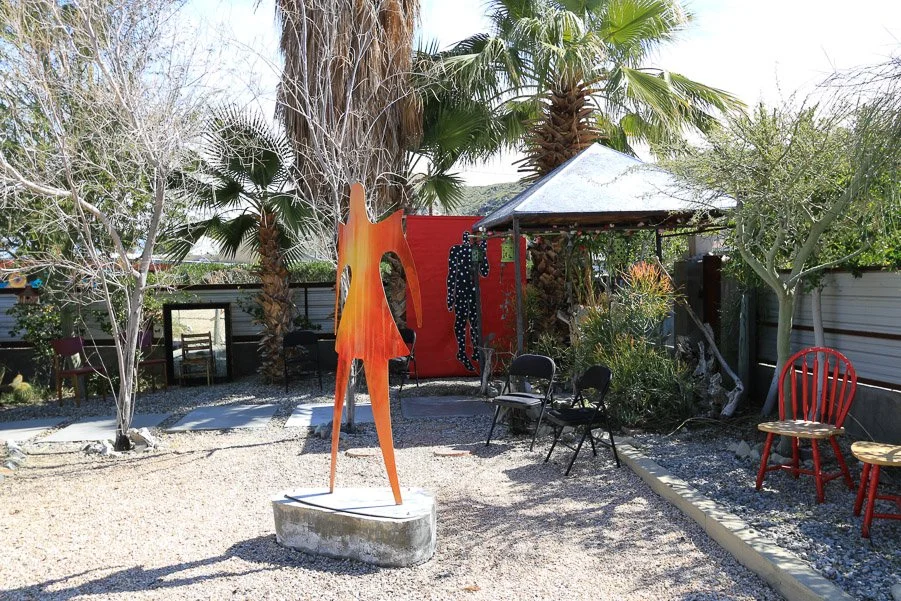
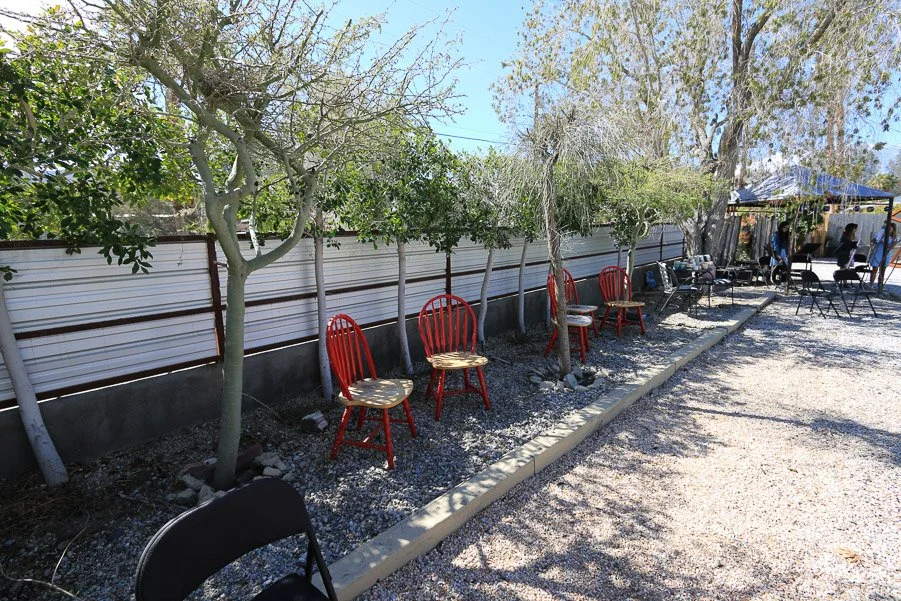
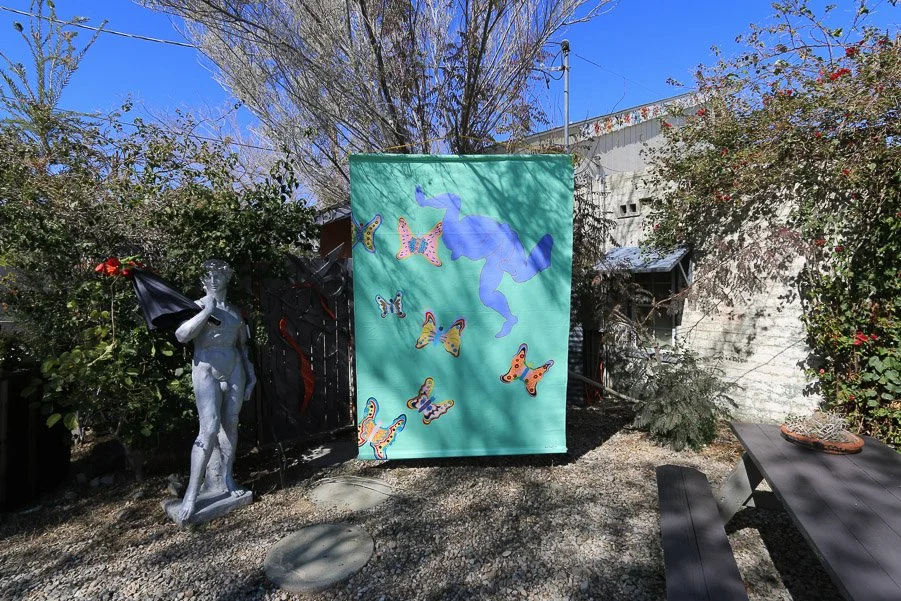
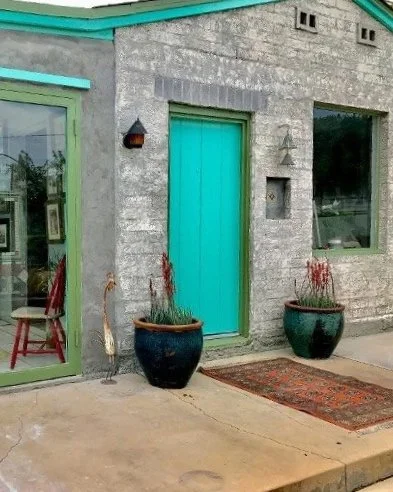
They embraced the adjacent alleyway long used by the Cathedral City Cove neighborhood as a pathway to the city center, commissioning local emerging artists to transform it with murals, artwork, and mosaics that eventually lined the walls surrounding the home. Following Pelton’s own practice of welcoming the community, they opened the house to neighbors, admirers of her work, and those drawn to the home’s vibrant creative energy. Over time, the house once again became a gathering place for artists and art lovers alike, hosting art historians, writers, dancers, and creatives across disciplines.
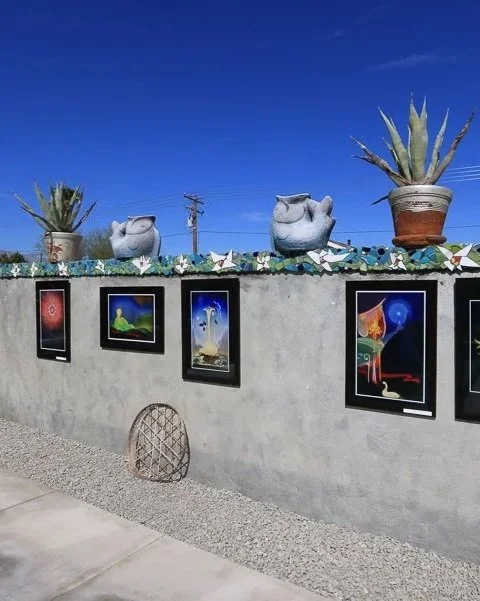
In loving memory of Simeon Den.
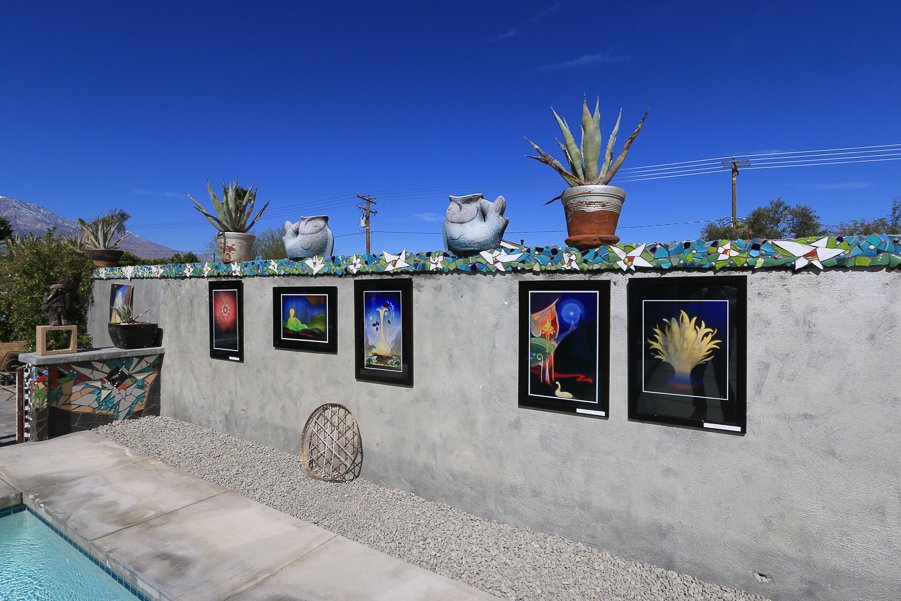
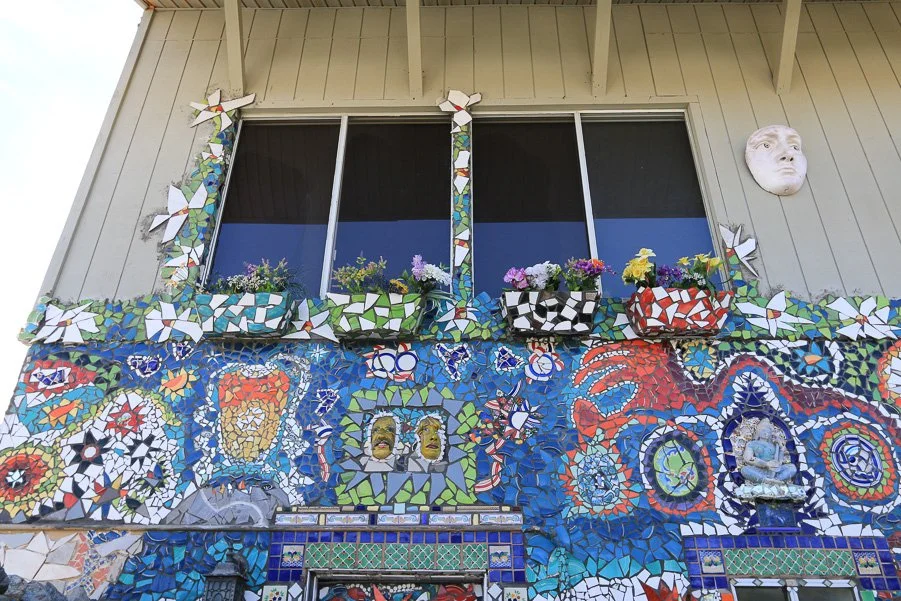
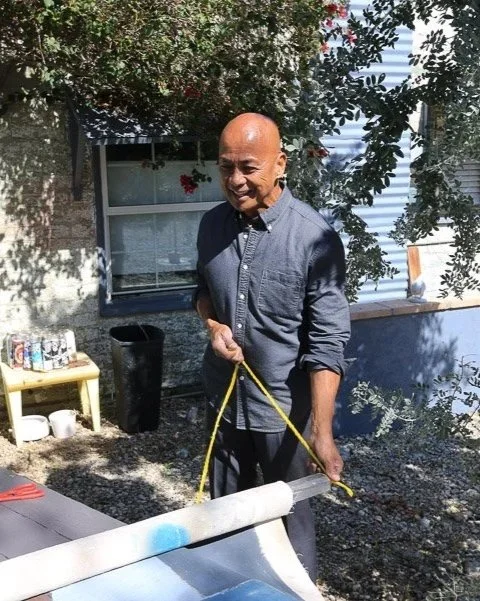
Both Peter and Simeon seemed uniquely suited to guide this next chapter of the home’s life. Simeon, a disciplined New Age mystic, hosted singing bowl gatherings by the pool and led weekly yoga and dance classes up until his passing. Peter developed a deep affinity for mosaic art, beginning with the alleyway walls and eventually extending into the home itself. Over time, he undertook long-term mosaic projects that complement the character of the house, both inside and out. Together, they organized community festivals, tours, and performances, including intuitive dance works staged on the home’s flat roof. In recognition of this legacy, the city ultimately designated the nearby alleyway and street as Agnes Pelton Way.